
Improve your crochet technique with the Crochet Sieve Stitch Tutorial Step By Step, offering clear instructions for adding a delicate and airy pattern to your projects.
The Crochet Sieve Stitch is a beautifully textured pattern that combines simplicity with an elegant design, making it perfect for a variety of crochet projects. This stitch is achieved through a sequence of single crochets and chain spaces, which together create a fabric with slight gaps or "sieves" throughout. This characteristic lends the stitch its name as well as a lightweight and breathable quality, ideal for making airy summer garments, delicate shawls, or sophisticated home decor accessories.

Crochet Sieve Stitch Tutorial
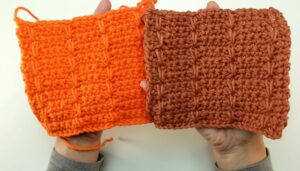
Appearance and Look of the Sieve Stitch
The Sieve Stitch is an elegant crochet pattern made using basic techniques such as single crochets and chains. This stitch is perfect for crocheters who are already familiar with these foundational methods.
Construction
- Single Crochets and Chains: The stitch pattern relies on a combination of single crochets and chains, making it accessible to those comfortable with these basic stitches.
- Ease of Learning: Since it uses simple techniques, the Sieve Stitch is easy to pick up, ensuring a smooth learning curve.
Spacing and Texture
- Slight Spacing: The chains create slight spacing between stitches, resulting in a balanced texture that is both airy and cohesive.
- Visually Appealing: The spacing provides an open, delicate look that is visually captivating.
- Quick Work-Up: The simplicity and repetition of the pattern allow it to be worked up quickly, making it ideal for larger projects or last-minute items.
Practical Applications
- Breathable Fabrics: The stitch’s airy structure is perfect for lightweight and breathable items such as summer garments, shawls, and market bags.
- Versatility: Its timeless design can be used across a variety of projects, from simple cloths to intricate home decor pieces.
- Customization: The pattern’s simplicity makes it easy to adjust in size, ensuring it can be adapted to meet the specific needs of any project.
Final Thoughts
The Sieve Stitch is a wonderful choice for those looking to enhance their crochet repertoire with a quickly worked, visually appealing texture. Its basic use of single crochets and chains makes it both easy to learn and versatile, suitable for a wide array of projects.
Materials Needed
- Worsted weight acrylic yarn
- 5 mm crochet hook
Note: Cotton yarn is also suitable for this stitch.
Pattern Instructions
Foundation and Row 1
- Start with a slip knot.
- Foundation Chain: Chain an even number of stitches (for the tutorial, 20 chains will use).
- Work Into Back Bars: Turn your work over to work into the back bars instead of the top loops of the chain.
- Row 1 Single Crochets: Skip the first chain. Starting from the second chain, insert your hook, yarn over, pull up a loop (two loops on the hook), then yarn over and pull through both loops on the hook. Repeat this single crochet in each chain across.

Row 2 (Repeat Row)
- Chain 1 and Turn: This turning chain does not count as a stitch.
- Single Crochet, Chain 1: Work a single crochet into the very first stitch. Chain 1, skip a stitch, then single crochet into the next stitch.
- Repeat: Continue with the pattern [chain 1, skip a stitch, single crochet in the next stitch] across the row.
Row 3 (Repeat Row)
- Chain 1 and Turn.
- Work Into Chain Spaces: Find the chain space from the previous row and work two single crochets into it.
- Repeat: Continue working two single crochets into each chain space across the row.
- Final Stitch: After completing the last chain space's single crochets, work a final single crochet into the last stitch.

Continuing the Pattern
- Repeat Rows 2 and 3 for the length of your project.
Project Completion
The tutorial demonstrates that after finishing the initially described rows, you simply repeat the process for Rows 2 and 3 to continue building the Sieve Stitch pattern to your project's desired length. This pattern, characterized by its aligned appearance and small gaps (chain spaces), is versatile for many projects, offering a quaint and attractive texture.


Leave a Reply